Record added successfully



Everyone has heard of Petra — the rose-red city, the Treasury at dawn, the legendary Siq. But just a few kilometers to the north, tucked quietly into the desert landscape, lies a place that most travelers walk straight past on their itineraries. Siq al-Barid, known affectionately as Little Petra, is one of Jordan's most rewarding hidden gems, and if you have not added it to your plans yet, here is why you absolutely should.
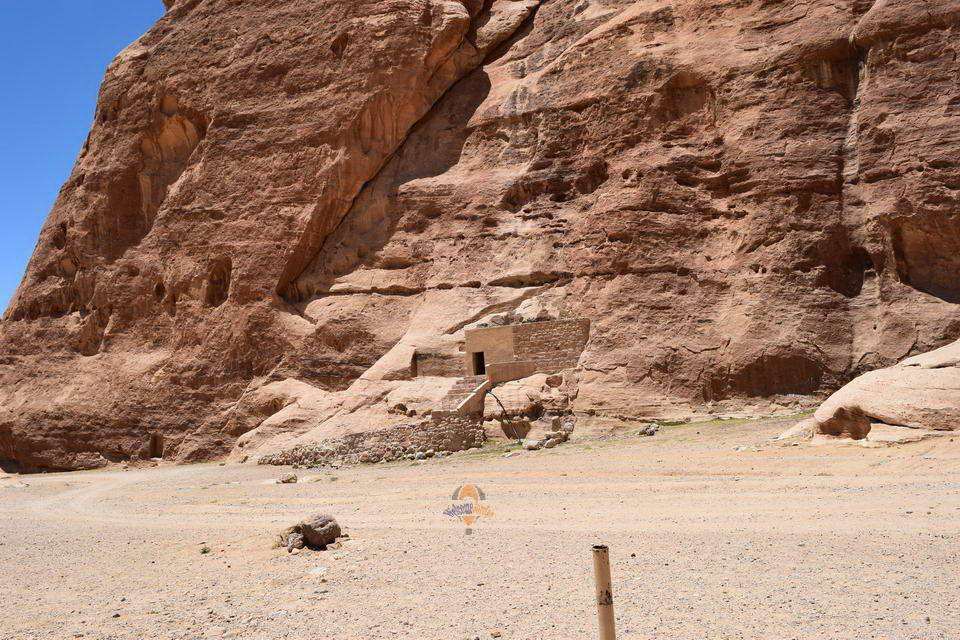
Siq al-Barid translates literally from Arabic as "the cold canyon," a nod to the shade that pools inside its narrow sandstone walls even on the hottest days. The nickname Little Petra comes naturally — this site shares the same breathtaking Nabataean rock-cut architecture as its famous neighbor, but without the crowds, without the entrance fees, and with an atmosphere that feels refreshingly intimate.
The Nabataeans, those brilliant ancient traders who carved Petra out of living rock between roughly the 4th century BCE and the 1st century CE, also built Siq al-Barid as a caravanserai — a stopping point where merchants traveling the incense and spice routes could rest, eat, and trade before continuing their journeys. What you see here are the remains of that world: carved dining rooms, storage chambers, cisterns, and temples, all cut directly into the cliffs.
The siq at Little Petra is short — walkable in a single morning — but every step rewards attention. As you move through the narrow canyon, the rose-red and amber walls close in around you, carved with doorways and niches that open into surprisingly spacious chambers. These were not homes but functional spaces: merchant dining halls, places of worship, and storage rooms that once overflowed with frankincense, spices, and silk.
Standing inside one of these carved rooms and imagining the camel caravans resting just outside is one of those quiet, goosebump moments that Jordan does so well. Unlike Petra, where the sheer scale of everything can feel overwhelming, Little Petra invites you to slow down and really look — to notice the chisel marks in the stone, the precise geometry of the niches, the way light shifts across the rock face as the sun moves.
The undisputed highlight of Siq al-Barid is a chamber known as the Painted House. Climb a few rough-cut steps in the upper section of the siq and you will find yourself inside a room whose ceiling is decorated with rare Nabataean frescoes — birds, vines, Eros figures, and intricate floral patterns painted in faded but still visible ochre and red. These paintings are among the only surviving examples of Nabataean fresco art in existence, which makes them genuinely extraordinary.
A guide who knows what to look for makes all the difference here. Context transforms a faded painted ceiling into a window onto a 2,000-year-old culture, and visiting as part of a knowledgeable group gives you the chance to share those discoveries with people experiencing the same sense of wonder.
A short walk from the entrance to Siq al-Barid brings you to an archaeological site that predates the Nabataeans by thousands of years. Beidha is one of the oldest known Neolithic settlements in the Middle East, dating back approximately 9,000 years. The low stone foundations are modest to look at but staggering to contemplate — people were building organized communities here before the pyramids, before written language, before almost everything we think of as ancient history.
There is something about Little Petra's scale and atmosphere that makes it especially rewarding to explore with others. The site is compact enough to feel manageable but rich enough that conversation flows naturally — between fellow travelers, between you and your guide, between the past and the present. Questions get answered, discoveries get shared, and the experience is genuinely richer for the company.
For travelers joining small group tours of southern Jordan, Little Petra fits beautifully alongside a Petra visit. The Featured Two Day Small Group Tour on Jordan Private Tours is worth exploring if you want your time in this region thoughtfully organized and socially shared with like-minded travelers.
Little Petra sits about 10 kilometers north of Wadi Musa, the town that serves as the gateway to Petra. The site is free to enter independently, though hiring a knowledgeable local guide adds enormous value. Early morning visits reward you with softer light and cooler temperatures, while late afternoon casts a golden warmth across the canyon walls that is genuinely beautiful.
If southern Jordan is on your radar — and it absolutely should be — Little Petra belongs on the list. Not as an afterthought, but as a destination in its own right. Jordan Private Tours specializes in exactly this kind of meaningful, shared discovery across Jordan's most remarkable places. Explore the site and find the group tour that fits your journey.